

 Keep reading
October 17, 2026
Best Time to Surf in Bali, Lombok and Java
When to surf Bali, Lombok and Java: the dry and wet seasons at Canggu, Nusa Lembongan, Kuta Lombok and Red Island, a…
Read more →

Surf ACADEMY
TALK TO US

By Mojosurf teamSeptember 18, 2026Last updated October 19, 20267 min read
Canggu is the stretch of Bali’s south-west coast where black-sand beaches, rice paddies and a long run of surf breaks sit within a few minutes of each other. It has waves gentle enough for a first lesson and waves that should be left to experienced surfers, often only a short walk apart. This guide explains which break suits which level, what the surf is like in every month of the year, and how tide and wind change things from one hour to the next.
Surf conditions change daily, and published guides do not always agree with each other. Where they differ we say so. Treat this as a starting point and always check conditions on the day with someone who knows the break.
| Where | South-west coast of Bali, Indonesia |
| Type of waves | Mostly reef and rock-bottom breaks, with softer rolling waves at the beginner spots |
| Best for | Beginners and improvers at Batu Bolong and Old Man’s; intermediate and advanced surfers at the surrounding reefs |
| Dry season | April to October: the most consistent swell, biggest from June to August |
| Wet season | November to March: smaller, more variable surf and fewer people outside the holidays |
| Water temperature | Roughly 25–28 °C in August and 28–30 °C in January |
| What to wear | Boardshorts or swimwear and a rash vest all year. No wetsuit needed |
| Nearest airport | Ngurah Rai International (Denpasar), about 45 minutes to an hour by road depending on traffic |
The breaks below run along a few kilometres of coast. The levels are a general guide: the same wave can be friendly on a small day and serious on a big one.
| Spot | Level | What to expect |
|---|---|---|
| Batu Bolong | Beginner to intermediate | The hub for surf schools in Canggu. A slow, rolling wave that is popular with longboarders and learners. It is busy for most of the day. Guides differ on the exact make-up of the bottom and the best tide, so ask on the day. |
| Old Man’s | Beginner | Next to Batu Bolong. A softer wave with both lefts and rights that breaks over reef. A favourite for first green waves when the swell is small. |
| Echo Beach | Intermediate and up | A left that breaks over reef. The reef is sharp and the line-up is often crowded. |
| The Sandbar | Advanced | A hollow, heavy wave. Most guides rate it for experienced surfers only. |
| River Mouth | Intermediate and up | A right-hander over reef that works on a higher tide. |
| Pererenan | Intermediate and up | Lefts and rights over reef and rock, usually less crowded than the central Canggu breaks. |
| Berawa | Intermediate to advanced | A reef break towards the Seminyak end of the coast, also usually less crowded. |
Start at Batu Bolong or Old Man’s, with an instructor, on a soft board. Both breaks give long, forgiving rides when the swell is small. They are also busy, so learning how to share a line-up safely is part of the lesson.
Batu Bolong on a bigger day, or Pererenan and the River Mouth on a smaller one, are the usual next steps. Go with someone who knows where the reef and rocks are before you paddle out at a new break.
You can surf Canggu in any month. What changes through the year is the size of the swell, the direction of the wind and the number of people in the water.
| Months | Season | Surf | Good to know |
|---|---|---|---|
| April to May | Start of the dry season | Swell becomes more consistent and the south-east trade winds settle in. | Quieter than mid-year. |
| June to August | Peak dry season | The biggest swells of the year. | July and August are the busiest months in the water and in town. Beginners do best on the smaller days and with a guide. |
| September to October | End of the dry season | Still consistent, usually easing in size. | Crowds thin out after August. |
| November to March | Wet season | Smaller, more variable surf. Winds turn to the west, which blows onshore at Canggu, so the calm windows matter more. | Christmas and New Year are busy. After heavy rain, rivers can wash debris into the sea and affect water quality. |
Yes, with realistic expectations. The surf is smaller and less predictable, which often suits learners, and the water is at its warmest. Rain tends to affect part of the day and not all of it. The trade-off is onshore wind on many days and poorer water quality straight after a downpour, when it is sensible to stay out of the water near river mouths.
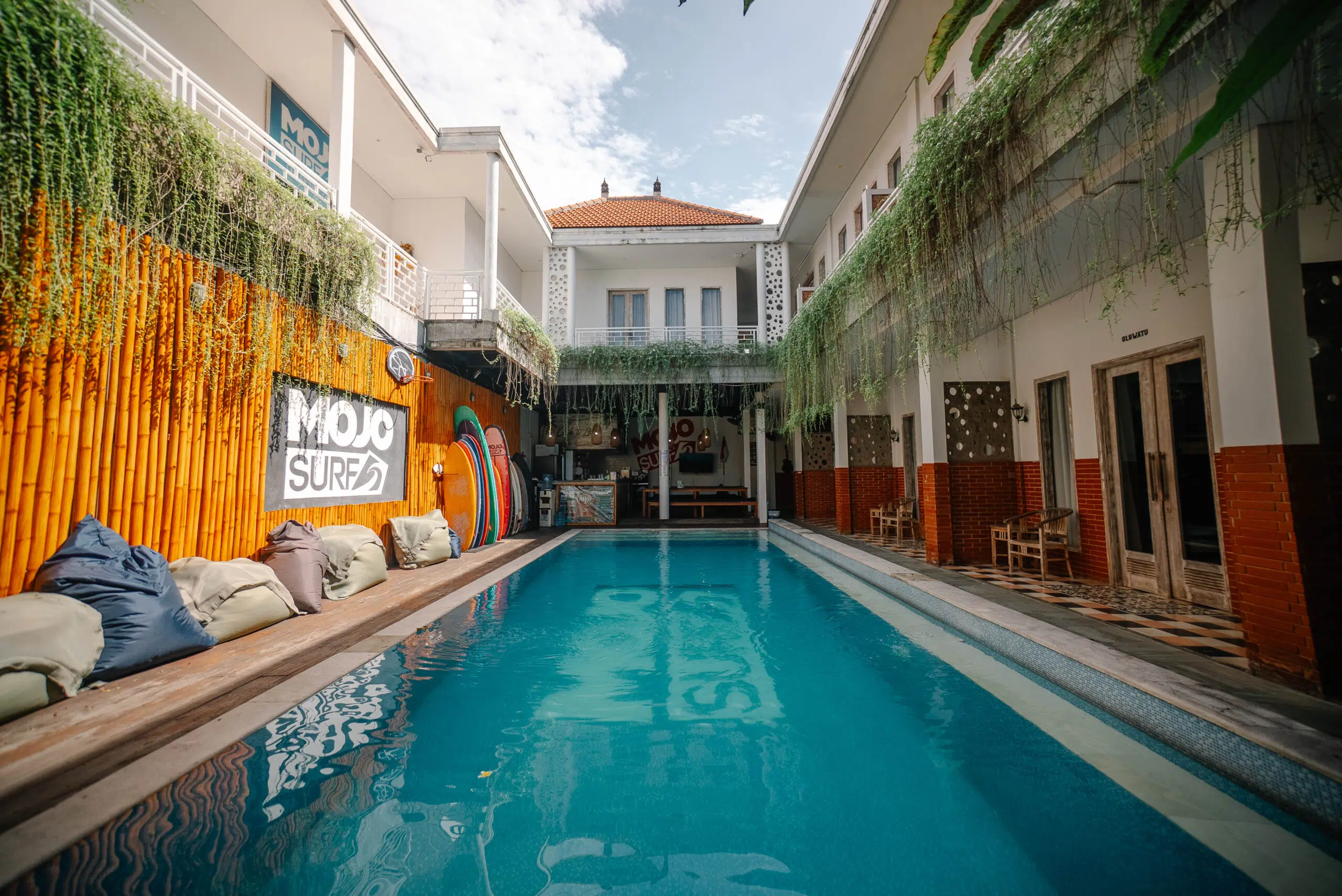
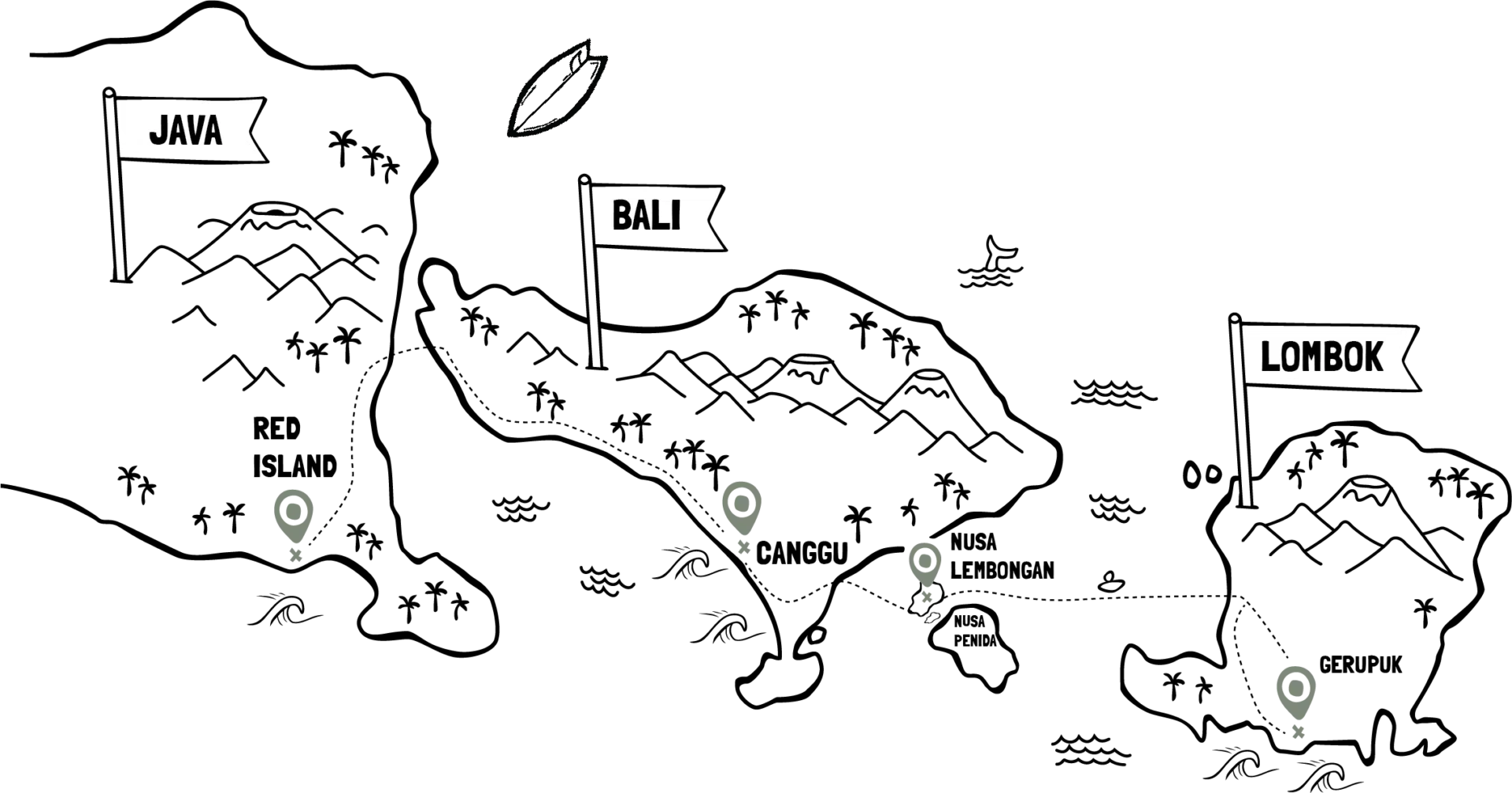
Fly into Ngurah Rai International Airport (DPS) near Denpasar. Canggu is about 45 minutes to an hour away by road, and longer when traffic is heavy. Once you are there, most breaks are a short ride or walk from each other.
Flat day or tired arms? Tanah Lot, the sea temple on its rock, is about 20 minutes up the coast. Pura Batu Bolong, the temple that gives the beach its name, sits right above the sand. Inland, the rice paddies are still there between the cafés, and the black-sand beaches face west for sunset. For what to eat between sessions, see our guide to Indonesian foods you have to try.
Yes, at the right breaks. Batu Bolong and Old Man’s have slow, rolling waves that suit learners, especially when the swell is small. Start there with an instructor on a soft board, go early before the wind picks up, and remember that the same reef break can be soft and easy on one tide and fast and shallow a few hours later. The other Canggu breaks are for intermediate and advanced surfers, so watch them from the beach until you are ready.
The wet season’s smaller, less predictable surf often suits learners. In the peak dry season, from June to August, beginners do best on the smaller days and with a guide. See all the ways to take surf lessons in Canggu with Mojosurf, with or without a stay at our Canggu surf camp.
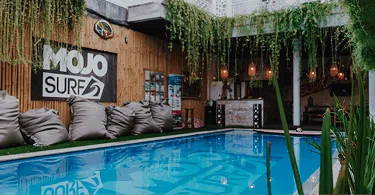
Mojosurf has run surf camps since 1998, and our Canggu Surf Camp is on Jalan Pantai Batu Bolong, close to the beginner breaks described above. Lessons are mobile, which means our instructors choose the spot that suits the conditions on the day.
You need to be able to swim 50 metres unaided to join a lesson.
4 questions
Still have a question?
Ask a surferYes, at the right breaks. Batu Bolong and Old Man’s have slow, rolling waves that suit learners, especially on smaller days. Other Canggu breaks are for intermediate and advanced surfers.
The dry season, April to October, has the most consistent swell, with the biggest waves from June to August. The wet season, November to March, has smaller and more variable surf with fewer people outside the holiday weeks.
No. The water stays at roughly 25 to 30 °C through the year. A rash vest is worth wearing for sun protection.
Early morning. In the dry season the wind usually gets up from mid-morning.
October 17, 2026
When to surf Bali, Lombok and Java: the dry and wet seasons at Canggu, Nusa Lembongan, Kuta Lombok and Red Island, a…
Read more →October 14, 2026
How much a Mojosurf surf camp costs in Australia, Bali and Portugal: the trip prices shown on our site, what each package…
Read more →October 12, 2026
When is the best time to surf in Portugal? A season-by-season summary for Ericeira and Peniche: the best months for beginners and…
Read more →