

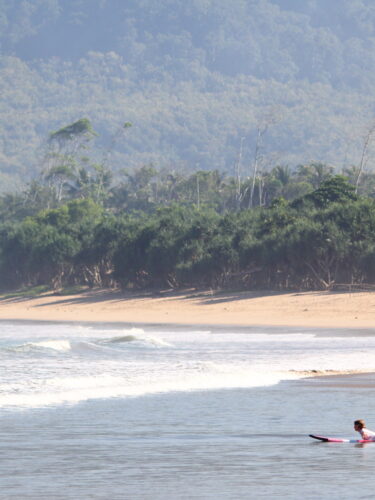
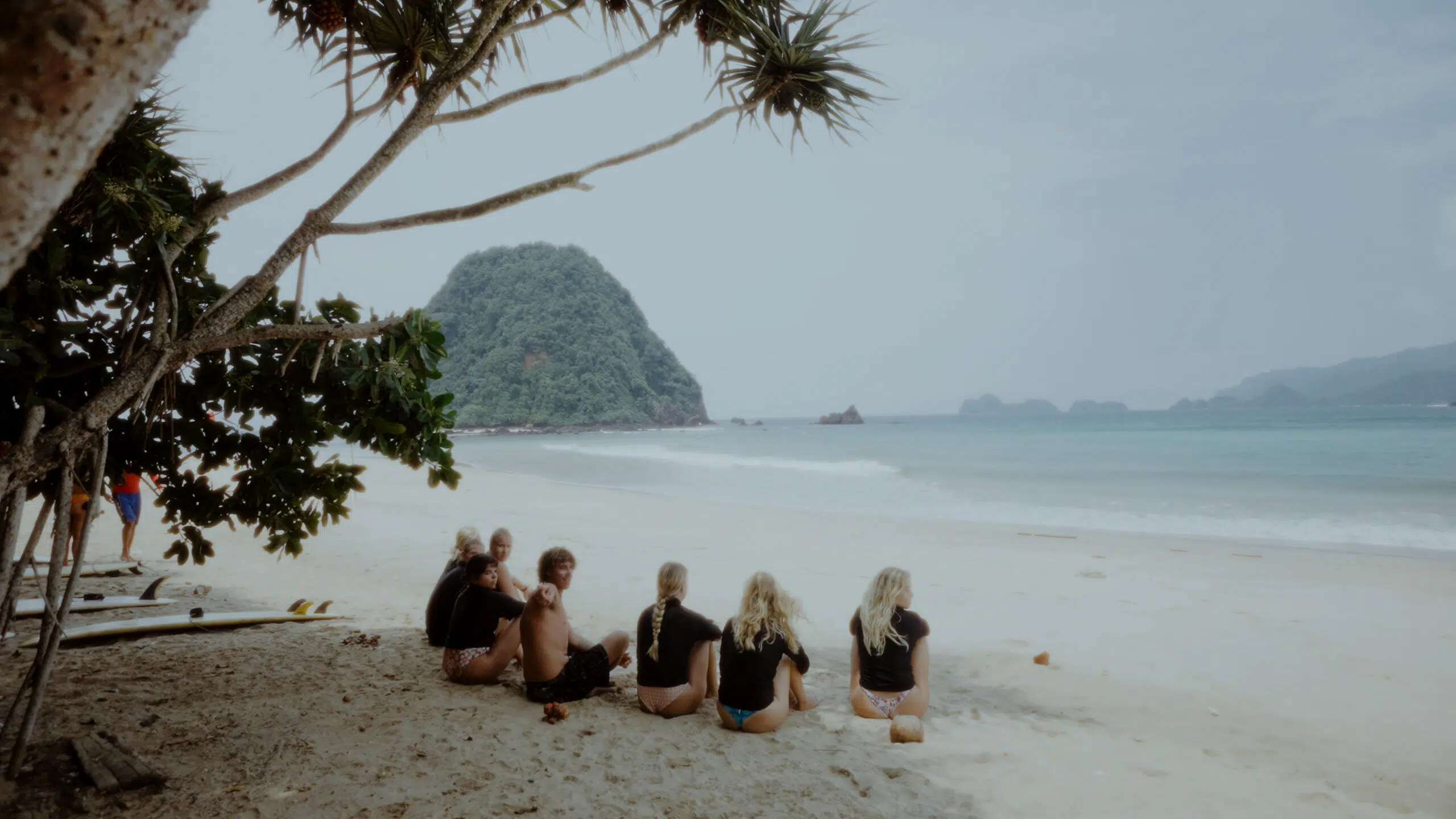
Red Island, or Pulau Merah, is a wide bay on the south coast of East Java, named after the small reddish hill of an island that sits just offshore. Unlike most well-known waves in Indonesia, it breaks over sand and not reef. That one fact makes it one of the more approachable places in the country to learn to surf, and it is far enough from Bali to feel like a different trip altogether.
Red Island is less documented than Bali, and we have left out anything we could not confirm. Conditions change daily, so check on the day with someone who knows the beach.
Red Island at a glance
| Where | Banyuwangi region, East Java, Indonesia, about 60 km south of Banyuwangi town |
| Type of wave | Sand-bottom beach break with lefts and rights |
| Best for | Beginners and intermediates |
| Access | Walk in from the beach. No boat needed |
| Swell season | May to November |
| Best conditions | South to south-west swell with wind from the north-east to south-east |
| What to wear | Boardshorts or swimwear and a rash vest for the sun |
The wave
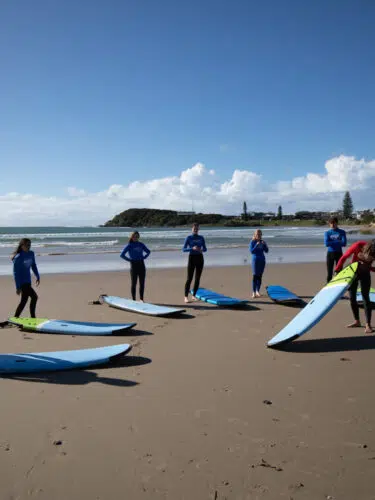
Red Island is a single long beach with peaks that break both left and right over sand. You walk in from the shore. For a learner that means two things: falling off is far more forgiving than on a reef, and you can stand in the shallows and practise in the white water before moving out to unbroken waves. For an intermediate surfer there is room to spread out along the bay and work on turns without a tight take-off zone.
| Spot | Level | What to expect |
|---|---|---|
| Red Island (Pulau Merah) | Beginner to intermediate | Sand-bottom beach break, lefts and rights, walk-in access. |
| G-Land (Plengkung) | Advanced only | A long, barrelling left over reef inside Alas Purwo National Park, at its best from May to October. One of Indonesia’s most famous waves, and not a place to learn. |
Red Island through the year
| Months | What to expect |
|---|---|
| May to November | The main swell season, when south and south-west swells reach the bay most reliably. |
| December to April | Indonesia’s wet season. Detailed, reliable information on Red Island’s surf in these months is thin, so we will not guess. Ask our team what conditions are like before you travel. |
Tides and wind
- Wind. The bay is cleanest with wind from the north-east through to the south-east.
- Tide. As at any beach break, the sandbanks shift and the best state of tide moves with them. At low tide it is possible to walk out to the islet, which sits roughly 100 metres offshore.
- Time of day. Mornings are usually the calmest part of the day in the tropics.
Red Island surf forecast
When you read a Red Island surf forecast, look for a south to south-west swell and wind from the north-east through to the south-east, the conditions in which the bay is cleanest. Mornings are usually the calmest part of the day.
Mondo.surf has a Red Island forecast. Surf-forecast.com does not list Red Island itself; its nearest named break is Grajagan Bay (G-Land), a reef wave for advanced surfers, so use it only as a rough guide to the swell. Conditions change daily, so check with our team at the camp before you paddle out.
Staying safe in the water
- Rips. Beach breaks have rip currents. Learn how to spot one, and if you are caught, stay calm and paddle across it, not against it.
- Other surfers. Keep hold of your board and look before you turn.
- Sun. Cover up and use water-resistant sunscreen.
- Bigger days. A sand bottom is forgiving, but a solid swell is still powerful. Stay inside your limits.
Getting to Red Island
From Bali, the route is overland to Gilimanuk on the island’s western tip, across the strait by ferry to Ketapang in Java, then south by road. From Banyuwangi town the drive is about two to three hours. Our own transfer from Canggu leaves at 8am and takes about seven hours by van and ferry.
Beyond the surf
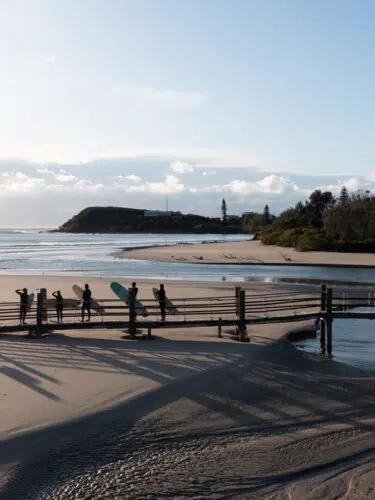
This corner of Java is rural and green. Alas Purwo National Park covers the peninsula to the south-east, and the region’s volcanoes are within reach for a night trek. The beach itself faces the sunset, with the red islet in the foreground.
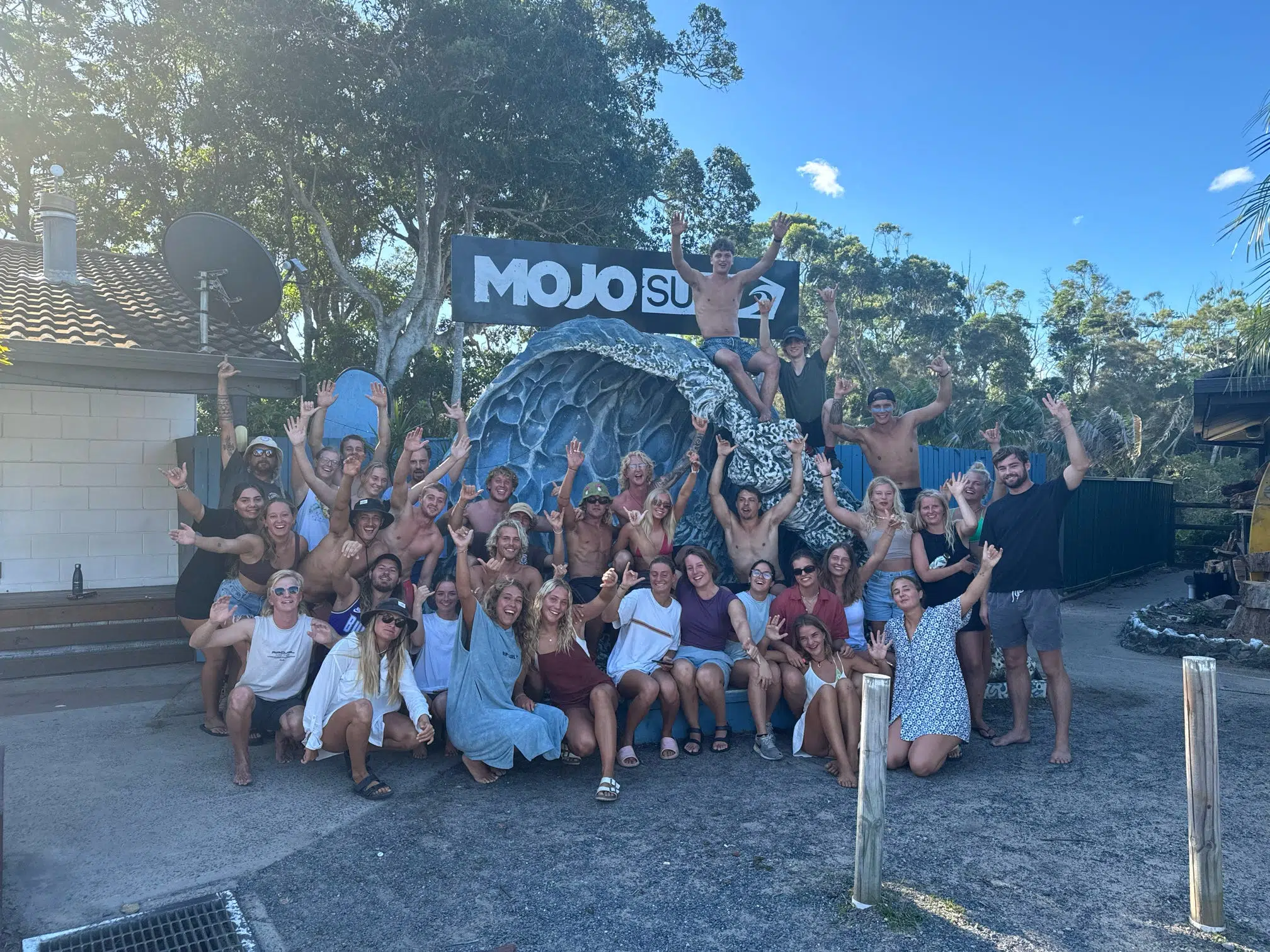
Surf Red Island with Mojosurf
Our Red Island Surf Camp is open to all levels.
- Red Island Surf & Stay: 3 to 6 days, starting on any day, with daily breakfast and one lesson for each night you stay. Transport is not included.
- 7 Day Red Island Surf Trip: includes return transport from Canggu.
- 15 Day Island Hopper: six nights at Red Island, combined with Canggu and Nusa Lembongan.
Optional day trips to G-Land and night volcano treks can be arranged from the camp. You need to be able to swim 50 metres unaided to join a lesson.
Keep exploring
- Island hopping from Bali: a surfer’s guide
- Canggu surf guide
- Nusa Lembongan surf guide
- Kuta Lombok surf guide
Red Island surf questions
4 questions
Still have a question?
Ask a surferIs Red Island good for beginners?
Yes. It is a sand-bottom beach break with walk-in access, which is much more forgiving than a reef.
When is the swell season?
May to November.
How do I get there from Bali?
Overland to Gilimanuk, by ferry to Ketapang in Java, then south by road. Our transfer from Canggu takes about seven hours.
Is G-Land suitable for learners?
No. G-Land is a powerful reef wave for advanced surfers.