 Keep reading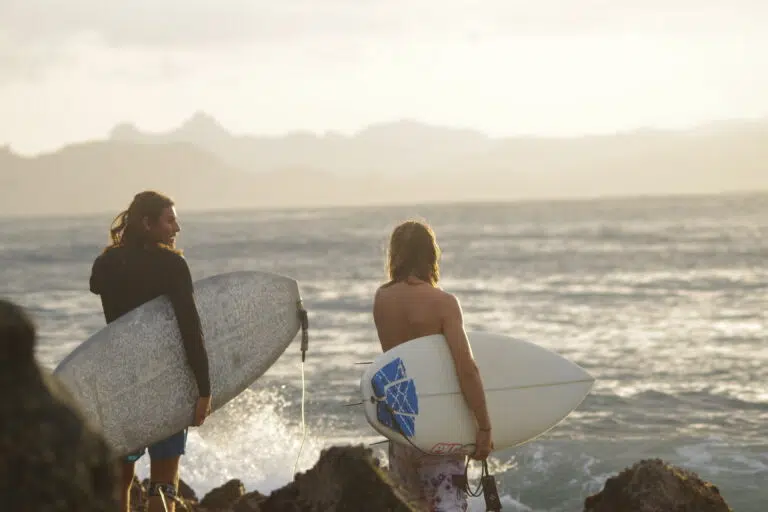
October 17, 2026
Best Time to Surf in Bali, Lombok and Java
When to surf Bali, Lombok and Java: the dry and wet seasons at Canggu, Nusa Lembongan, Kuta Lombok and Red Island, a…
Read more →

Surf ACADEMY
TALK TO US
Byron Bay sits beside Cape Byron, the most easterly point of mainland Australia. The cape bends the coast so that the town’s beaches face north while the beaches on the other side face south-east. For surfers that is the whole secret of the place: whatever the wind and swell are doing, one side of the cape is usually better than the other. Add the beaches and points south towards Lennox Head and Ballina, and there is a wave for every level within a short drive.
This is the Country of the Arakwal people of the Bundjalung nation. The area’s traditional name, Cavanbah, means “meeting place”.
Surf conditions change daily, and published guides do not always agree with each other. Where they differ we say so. Treat this as a starting point and always check conditions on the day with someone who knows the break.
| Where | Far north coast of New South Wales, Australia |
| Type of waves | Sand-bottom beach breaks and right-hand point breaks |
| Best for | All levels, depending on the beach |
| Water temperature | About 25–27 °C in February and 19–22 °C in August |
| What to wear | Boardshorts or swimwear and a rash vest in summer; a springsuit or 3/2 mm wetsuit in winter |
| Patrolled beach | Main Beach is the only beach in Byron Shire patrolled all year |
| Nearest airports | Ballina Byron Gateway, about 30 minutes; Gold Coast, about 65 km; Brisbane, about 165 km |
| Spot | Level | What to expect |
|---|---|---|
| Main Beach | Beginner | A sand-bottom beach break in front of town, patrolled all year. |
| Clarkes Beach | Beginner to intermediate | Between Main Beach and The Pass, sheltered from southerly and easterly winds. |
| The Pass | Guides differ | A long right-hand point and one of Australia’s best-known waves. It is very crowded, and guides disagree on which level it suits. |
| Wategos | Beginner and longboard | A mellow right-hand point tucked under the cape. |
| The Wreck | Intermediate and up | Breaks beside the wreck of the SS Wollongbar, north of Main Beach. |
| Belongil | Varies with the sandbanks | A long beach running north from The Wreck, with more room. |
| Tallow Beach | Intermediate and up | On the south side of the cape. Exposed, and the most consistent beach in the area. |
| Broken Head | Intermediate to advanced | A right-hand point 15 to 20 minutes’ drive south. |
| Spot | Level | What to expect |
|---|---|---|
| Seven Mile Beach | Beginner-friendly | The long beach running north from Lennox Head. |
| Lennox Point | Experienced only | A powerful right-hand point over boulders and a National Surfing Reserve. |
| Sharpes Beach and Flat Rock | Beginner to intermediate | Beaches between Lennox Head and Ballina. |
| Lighthouse Beach | Varies with the sandbanks | Ballina’s town surf beach. |
Air temperatures are the Bureau of Meteorology’s long-term averages for Cape Byron. Any single day can differ.
| Month | Average high | Average low |
|---|---|---|
| January | 27.5 °C | 20.8 °C |
| February | 27.6 °C | 20.7 °C |
| March | 26.5 °C | 19.6 °C |
| April | 24.5 °C | 17.2 °C |
| May | 21.9 °C | 14.9 °C |
| June | 19.7 °C | 12.4 °C |
| July | 19.3 °C | 11.7 °C |
| August | 20.2 °C | 12.5 °C |
| September | 22.1 °C | 14.4 °C |
| October | 23.3 °C | 16.1 °C |
| November | 24.7 °C | 17.8 °C |
| December | 26.4 °C | 19.6 °C |
You can surf Byron Bay all year, and the cape means there is usually a sheltered option. Here is what each season brings.
| Season | Swell and wind | Water and weather |
|---|---|---|
| Summer and early autumn December to April | Swell comes mainly from the east and north-east, from trade winds and from tropical cyclones far out to sea. North-easterly winds are common and can bring bluebottles. | The warmest water, about 25 to 27 °C in February. Average highs of 24.5 to 27.6 °C. |
| Late autumn and winter May to August | Swell comes mainly from the south, often with offshore westerly winds in the morning. | Cooler water, about 19 to 22 °C in August, and crisp days with average highs of 19.3 to 21.9 °C. Humpback whales pass the cape, with the most sightings from July to September. |
| Spring September to November | A changeover season with a mix of both patterns. | Warming water, with average highs of 22.1 to 24.7 °C. |
Guides disagree on which season is best for beginners, and the honest answer is that it depends on the beach. Because the coast faces several directions, there is usually somewhere suitable for learners at any time of year.
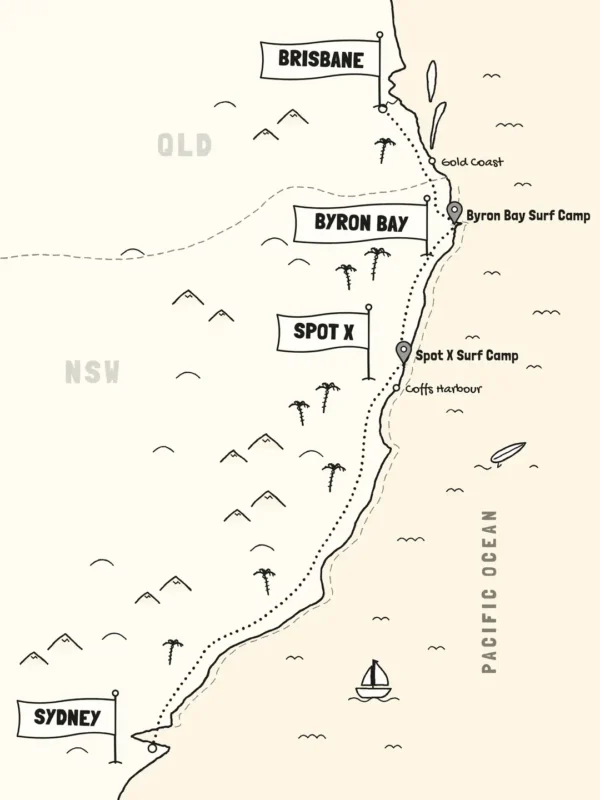
Ballina Byron Gateway Airport is about 30 minutes away. Gold Coast Airport is about 65 km north, and Brisbane is about 165 km, or under two hours by road. From Sydney it is roughly 770 km, about eight and a half hours’ drive.
Walk the track around the cape to the Cape Byron Lighthouse, built in 1901, and stand at the most easterly point of the mainland. From May to November humpback whales migrate past the headland, with the most sightings from July to September. Sightings are never guaranteed, but the lighthouse is one of the better places on the coast to look. Hungry afterwards? See our guide to Australian foods you have to try.
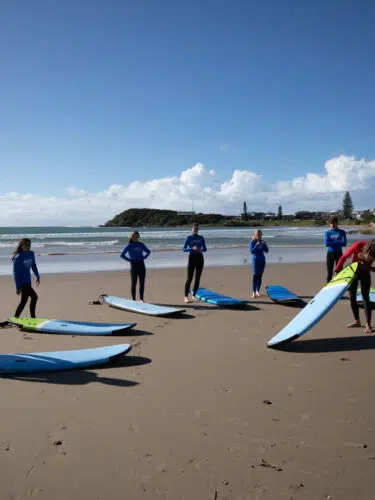
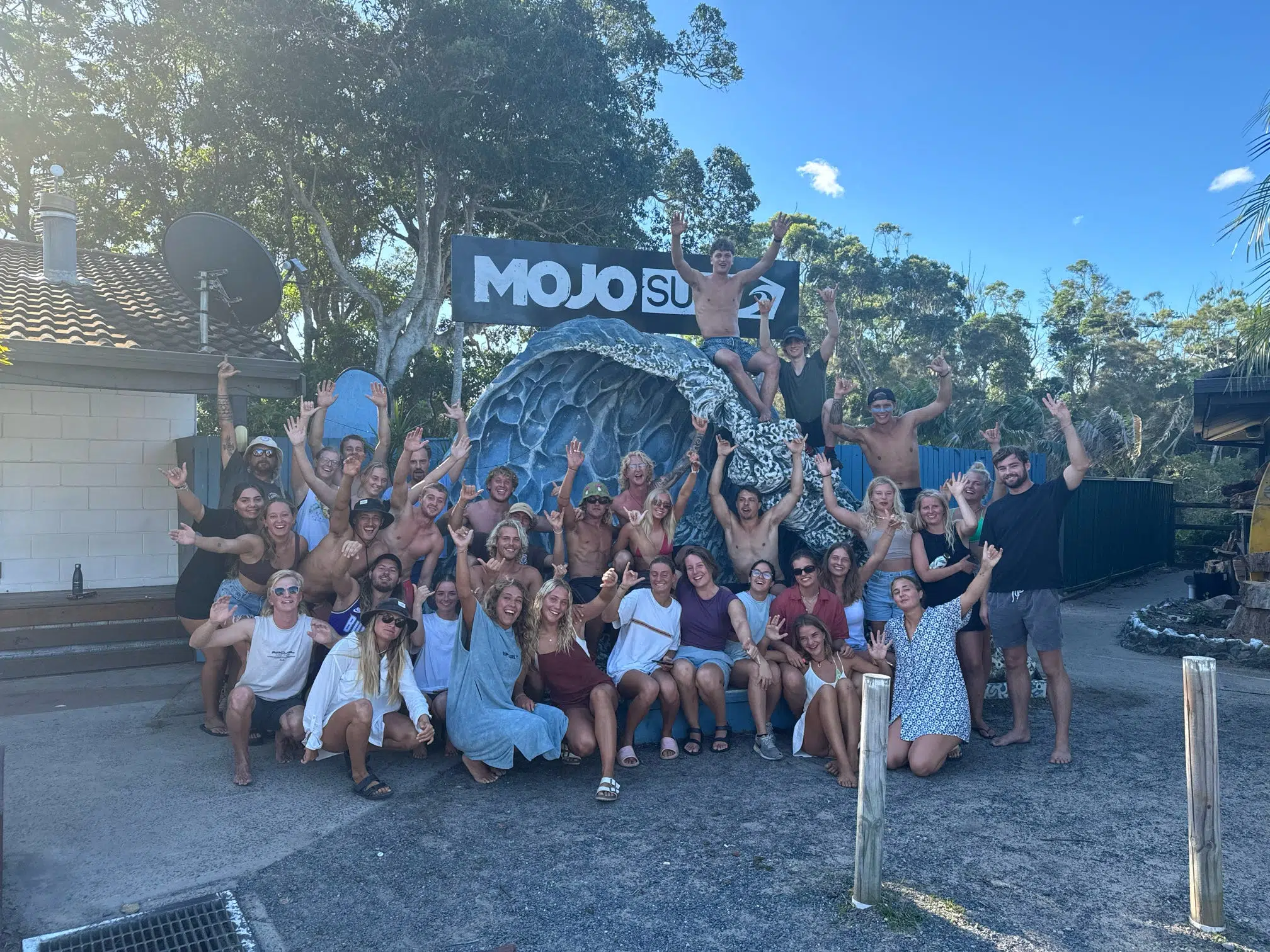
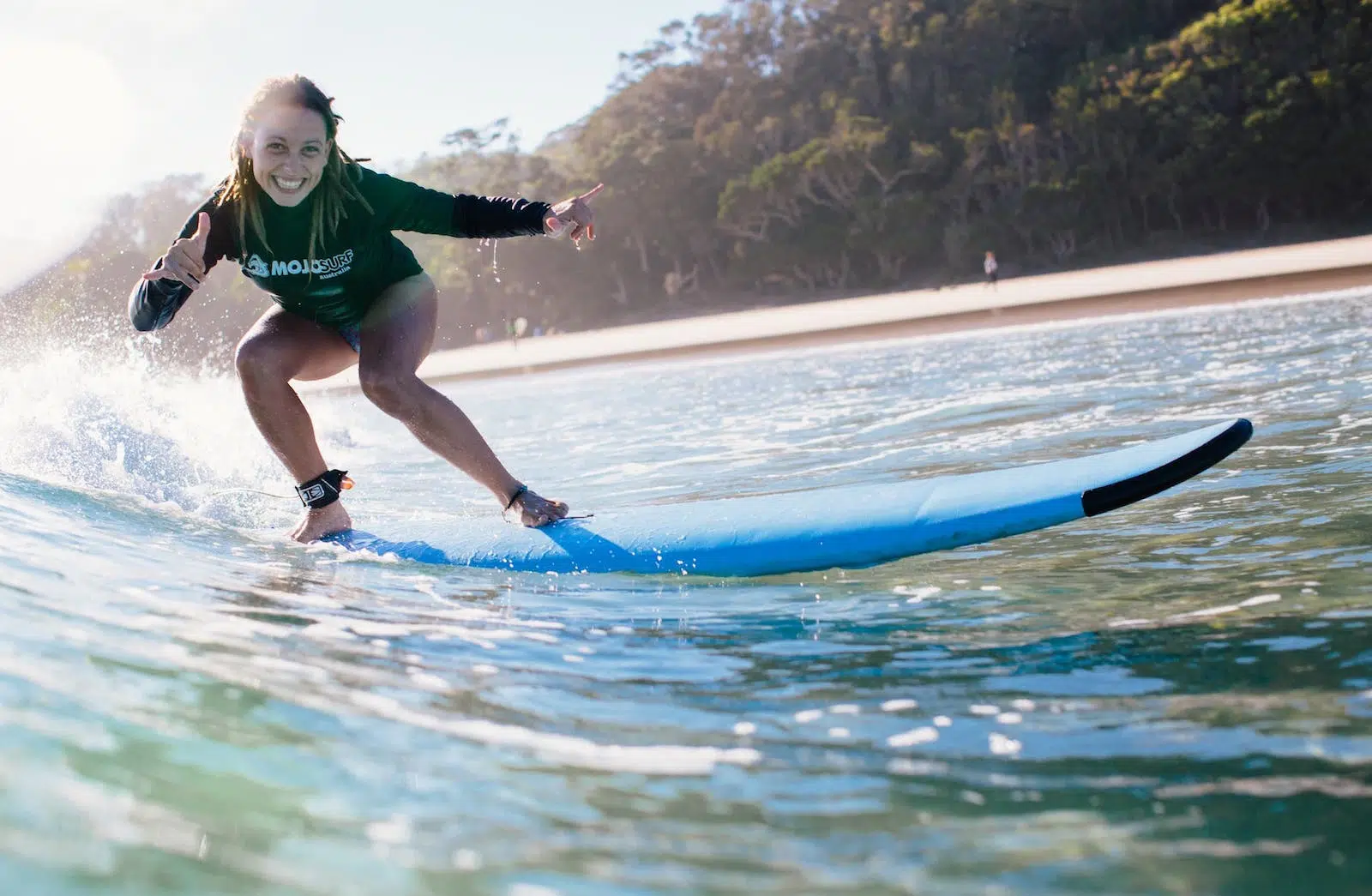
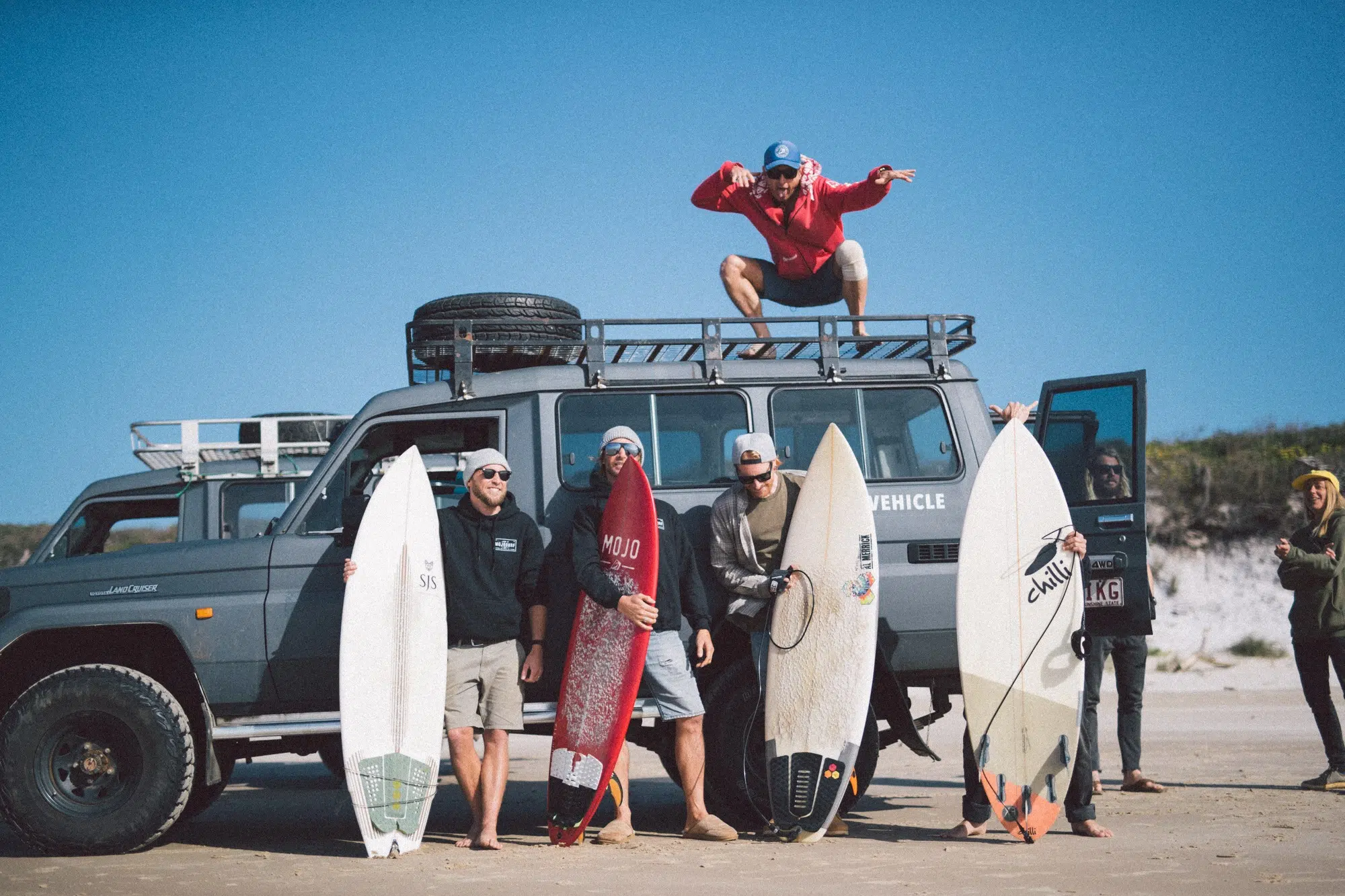
Mojosurf has been teaching people to surf since 1998. Our Byron Bay Surf Camp is based at the Arts Factory Lodge, a ten-minute walk from town. Lessons are held at beaches near Lennox Head or Ballina, chosen for the conditions on the day, and transport to the surf is included.
You need to be able to swim 50 metres unaided to join a lesson.
4 questions
Still have a question?
Ask a surferYes. Main Beach is a sand-bottom beach break patrolled all year, and Wategos is a mellow point. The area also has waves for experienced surfers only, such as Lennox Point.
Yes. Summer and autumn bring easterly swells and warm water. Winter brings southerly swells and offshore winds. The cape means there is usually a sheltered option.
Not in summer, when the water is about 25 to 27 °C. In winter it drops to about 19 to 22 °C and most people wear a springsuit or a 3/2 mm wetsuit.
Humpbacks pass from May to November, with the most sightings from July to September.
October 17, 2026
When to surf Bali, Lombok and Java: the dry and wet seasons at Canggu, Nusa Lembongan, Kuta Lombok and Red Island, a…
Read more →October 14, 2026
How much a Mojosurf surf camp costs in Australia, Bali and Portugal: the trip prices shown on our site, what each package…
Read more →October 12, 2026
When is the best time to surf in Portugal? A season-by-season summary for Ericeira and Peniche: the best months for beginners and…
Read more →