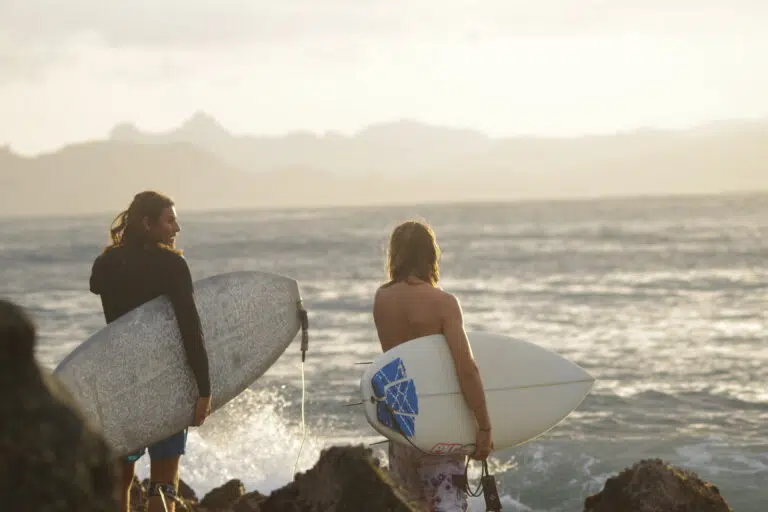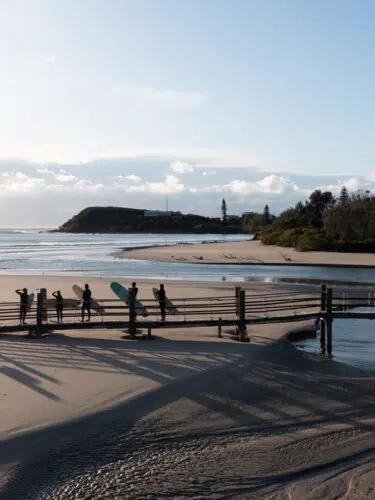

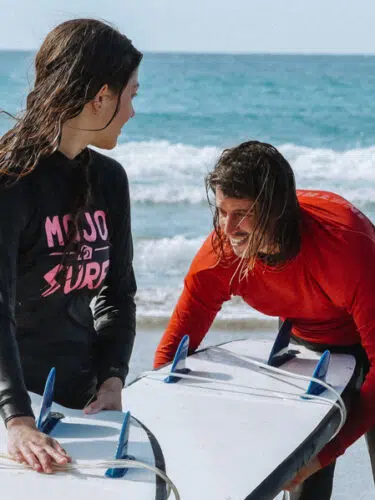
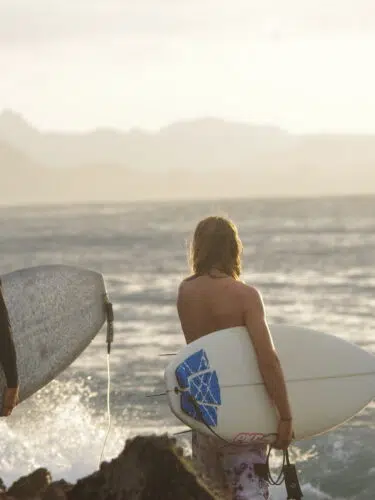

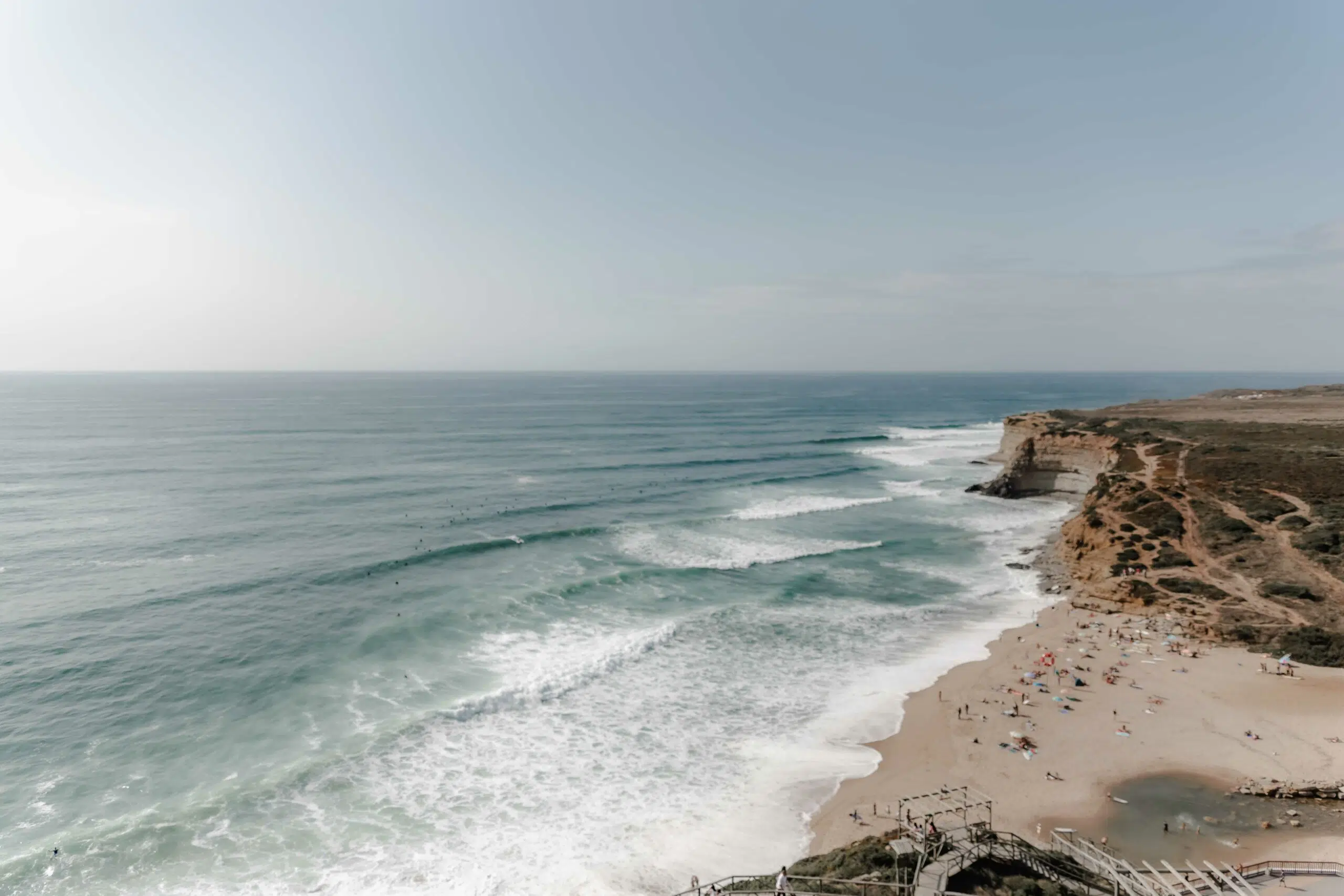
Ericeira is a whitewashed fishing town on the Atlantic coast north-west of Lisbon, and one of the best-known surf towns in Europe. Its coastline was approved as a World Surfing Reserve in February 2011 and formally dedicated on 14 October 2011. It was the first World Surfing Reserve in Europe and the second in the world. The reserve is known for its reefs and points, but there are also sandy beaches nearby where beginners learn, and that mix is what makes the town work for every level.
Surf conditions change daily, and published guides do not always agree with each other. Where they differ we say so. Treat this as a starting point and always check conditions on the day with someone who knows the break.
Ericeira at a glance
| Where | Atlantic coast of Portugal, north-west of Lisbon |
| Type of waves | Reef and point breaks in the reserve, with sand-bottom beach breaks to the south |
| Best for | Beginners at Foz do Lizandro and São Julião; improvers at Matadouro; experienced surfers at Ribeira d’Ilhas and Coxos |
| Best for beginners | June to August: the smallest waves and warmest water |
| Best all-round | September to November: consistent, clean swell |
| Water temperature | About 14–16 °C in winter, rising to about 19–20 °C in August and September |
| What to wear | A wetsuit all year. See the table below |
| From Lisbon | About 45 minutes by car on the A8, or about an hour to an hour and a half by bus from Campo Grande |
Stay at our Ericeira surf camp
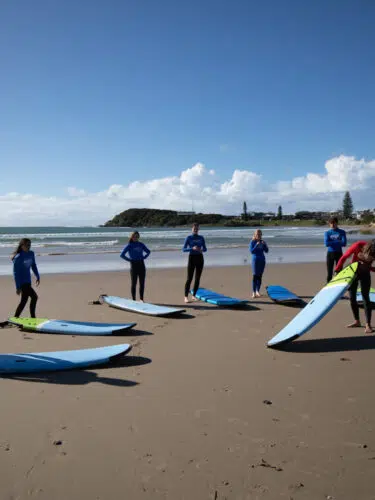
Surf & Stay at our Ericeira surf camp runs for 3 to 8 days, with surf lessons at Matadouro Beach, yoga and daily breakfast. You can arrive any day of the week. From €325 per person for 3 days in a shared dorm, plus the local tourist tax paid at check-in.
The World Surfing Reserve
World Surfing Reserves are designated by the Save The Waves Coalition to recognise and protect outstanding surf coastlines. The Ericeira reserve is built around seven breaks: Pedra Branca, Reef, Ribeira d’Ilhas, Cave, Crazy Left, Coxos and São Lourenço. Most of these are powerful waves over rock and are best watched from the cliffs unless you are an experienced surfer.
Ericeira surf spots by level
| Spot | Level | What to expect |
|---|---|---|
| Foz do Lizandro | Beginner | A sandy beach break at a river mouth, about five minutes south of town. A main learning beach. |
| São Julião | Beginner to intermediate | A long beach break about ten minutes’ drive south. |
| Matadouro | Beginner to intermediate | An A-frame over a mix of reef and sand, within walking distance of town. Best from mid to high tide. |
| Praia dos Pescadores | Beginner to intermediate | The sheltered fishermen’s beach in the middle of town. Works at high tide. |
| Ribeira d’Ilhas | Intermediate and up | The famous right-hand point about 3 km north of town. Rocky entry and exit. |
| Coxos | Expert only | A powerful right-hand reef break and the best-known wave in the reserve. |
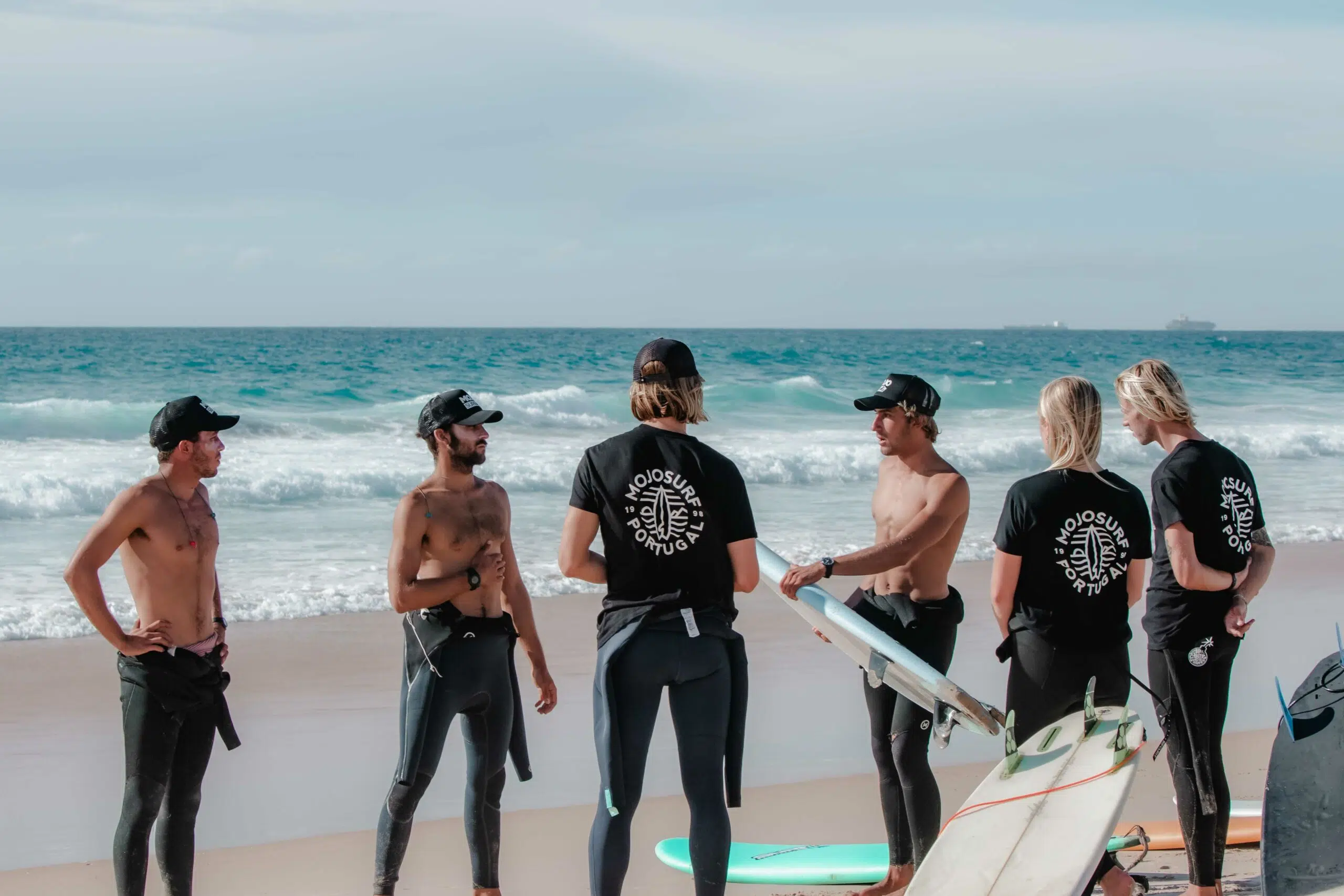
Ericeira surf seasons through the year
Ericeira has waves in every season. The time of year decides how big they are, how cold the water is and how many people are in it. Water temperatures are long-term monthly averages from SeaTemperature.org (about 19.6 °C in August and 19.9 °C in September). Any single day can differ.
| Months | Surf | Wetsuit | Good to know |
|---|---|---|---|
| December to February | The biggest swells of the year. Prime time for experienced surfers. | 4/3 mm with boots. Water about 14–16 °C. | Learners can still surf on the right day at a sheltered beach, with a guide choosing the spot. |
| March to May | Swell eases as spring goes on. | 4/3 mm moving to 3/2 mm. | The quietest time in the water. |
| June to August | The smallest waves of the year. | 3/2 mm or a shorty on warm days. Water about 19–20 °C by August. | The best season for beginners, and the busiest. |
| September to November | Consistent, clean swell. | 3/2 mm moving to 4/3 mm. | Widely seen as the best all-round season. |
Surfing Ericeira in November
November is the end of the September to November season, widely seen as the best all-round time to surf Ericeira, with consistent, clean swell. Wetsuits move from a 3/2 mm to a 4/3 mm through the season, so by November the 4/3 mm is the safer choice. Winter follows, bringing the biggest swells of the year. Beginners should stay at the sandy beach breaks such as Foz do Lizandro and São Julião and leave the reserve’s reefs to experienced surfers.
Comparing Ericeira with Peniche? See the best time to surf in Portugal, season by season for both towns.
Tides and wind
- The tide moves a long way. The Atlantic tide here rises and falls enough to change a break completely within a few hours. Matadouro and Praia dos Pescadores, for example, work best with more water.
- Reefs get shallow. A reef that is comfortable at high tide can be exposed rock at low tide.
- Mornings are often calmer. Wind tends to build through the day in summer.
Reading the Ericeira surf forecast
A surf forecast shows the swell, the wind and the tide. In Ericeira the tide matters as much as the swell, so read all three together.
- Swell size. The biggest swells arrive from December to February and suit experienced surfers. On big days, learners are better off at a sheltered beach, with a guide choosing the spot.
- Tide. The tide here can change a break completely within a few hours, so check the tide times as well as the swell. Matadouro is best from mid to high tide, Praia dos Pescadores works at high tide, and a reef that is fine at high tide can be exposed rock at low tide.
- Wind. Mornings are often calmer, because wind tends to build through the day in summer. An early session is usually the cleaner one.
- Check on the day. A forecast is only a guide. Look at the break before you paddle out, or ask someone who knows it.
Staying safe in the water
- Rocks. Many breaks have a rocky bottom and a rocky way in and out. Boots help.
- Cold water. Wear the right wetsuit and get out before you are tired and cold.
- Winter power. Atlantic winter swells are strong. Stay inside your limits.
- Respect the line-up. The reserve’s waves are surfed by skilled locals. Learners belong at the beach breaks.
Getting to Ericeira
Fly into Lisbon. Ericeira is about 45 minutes away by car on the A8 motorway. Buses run from Campo Grande in Lisbon and take about an hour to an hour and a half.
Beyond the surf
Ericeira is still a working fishing town, with blue-and-white houses, cobbled lanes and seafood restaurants above the harbour beach. A short drive inland is the National Palace of Mafra, a vast baroque palace and monastery that was added to the UNESCO World Heritage list in 2019.
Surf Ericeira with Mojosurf
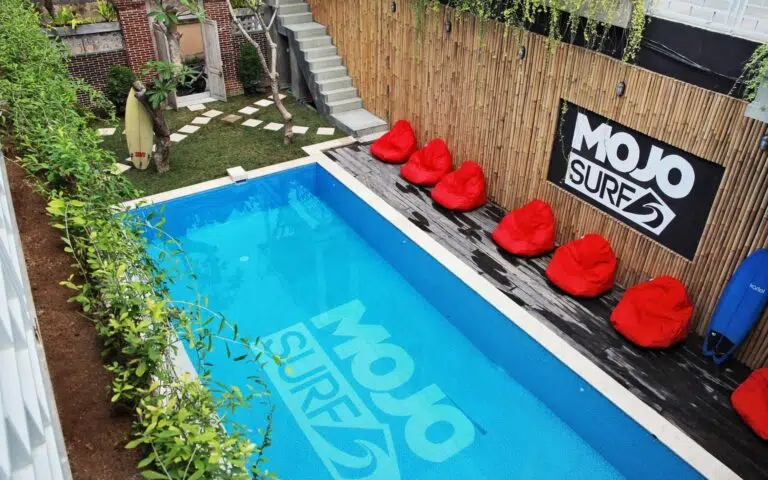
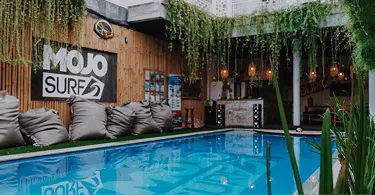
Our Ericeira surf camp has a pool and a skate ramp and is pet-friendly. Lessons are run with our local partner, Surf 365 Ericeira, at Matadouro Beach.
- Surf & Stay Ericeira: 3 to 8 days with surf lessons, yoga and daily breakfast.
- 7 Day Portugal Surf Adventure: two nights in Peniche and four in Ericeira, with five lessons, video analysis, guided free surfs, yoga and the transfer between the two towns.
You need to be able to swim 50 metres unaided to join a lesson.
Keep exploring
- Ericeira vs Peniche: which is right for you?
- Peniche and Baleal surf guide
- Best time to surf Portugal: Ericeira and Peniche season by season
- Surf Portugal with Mojosurf
Ericeira surf questions
4 questions
Still have a question?
Ask a surferIs Ericeira good for beginner surfers?
Yes, at the right beaches. Foz do Lizandro and São Julião are sandy beach breaks used for lessons. The reserve’s reefs, such as Coxos, are for experienced surfers.
When is the best time to surf Ericeira?
June to August for beginners, with the smallest waves and warmest water. September to November for the best all-round conditions. December to February for experienced surfers who want size.
Do I need a wetsuit in Ericeira?
Yes, all year. A 4/3 mm with boots in winter and a 3/2 mm in summer.
How far is Ericeira from Lisbon?
About 45 minutes by car, or about an hour to an hour and a half by bus from Campo Grande.